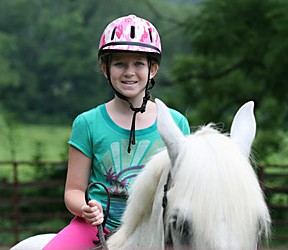
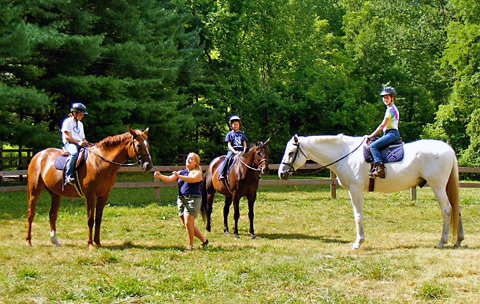
 \n\nThe typical lesson at Rockbrook’s riding camps match up girls with similar horseback riding experience and skills. This allows the equestrian instructors to tailor each lesson to the right level for the young girls in that class. Even though our youth riding camp lessons happen every day except Sunday, and even though campers tend to have the same 2-4 other girls in their class, it’s also possible for each rider’s assigned horse to change over the course of their camp riding lessons. The instructors make those changes based on how a young rider is doing in the lessons.\n\nEach lesson also focuses on a specific forward seat (English Hunter Jumper) riding skill, generally. Everyone in the class might work on learning to post at a trot, to canter, or even jump their horse, for example. This is great because the riding instructors can coach each girl individually but also make suggestions that may benefits all of the riders in the class. It’s an ideal way to teach youth riding.\n\nLike for all the activities at Rockbrook, when girls take horseback riding they learn a lot and improve their skills, but they have tons of fun doing it.\n\n
Riding Lessons at RBC
November 16, 2010