My daughter came home just bubbling with self confidence! She had a wonderful counselor and I’m so pleased with how much she’s grown personally and socially. Absolutely priceless!
Parent, Orlando, FL
November 30, 2010
My daughter came home just bubbling with self confidence! She had a wonderful counselor and I’m so pleased with how much she’s grown personally and socially. Absolutely priceless!
“We have shifted our culture from one that is engaged in a healthy, interactive, imaginative way to one that is inwardly facing, sedentary and expecting things to be fed to us.” — Dr. Michael Rich, Director of the Center of Media and Child Health
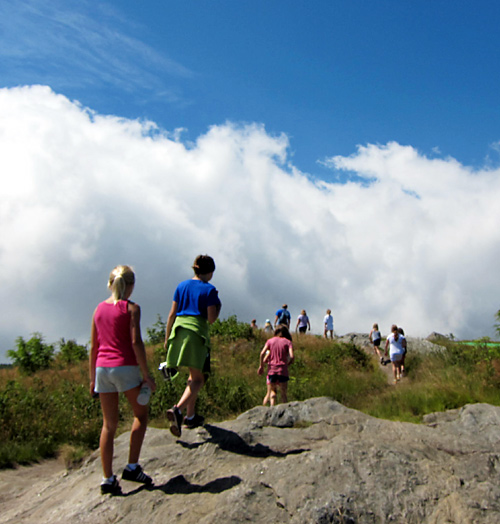
The National Wildlife Federation has joined the ongoing discussion among educators about the importance for children of outdoor experience. In response to the drastic decline of the time modern children spend outdoors, they have launched a well-organized campaign to provide “practical tools for families, schools and communities [that] will make being outdoors a fun, healthy and automatic part of everyday life.” It’s called “Be Out There.”
There is an excellent web site for the program that is full of great resources for parents and educators.
The site reports some troubling facts. “Children are spending half as much time outdoors as they did 20 years ago. Today, kids 8-18 years old devote an average of 7 hours and 38 minutes using entertainment media in a typical day (more than 53 hours a week).” And there are equally troubling related consequences: increased child obesity, decreased creativity, imagination, and social skills.
The benefits of outdoor experience have been well researched as well. “Outdoor play increases fitness levels and builds active, healthy bodies. Spending time outside raises levels of Vitamin D, helping protect children from future bone problems, heart disease, diabetes and other health issues. Exposure to natural settings may be widely effective in reducing ADHD symptoms. Exposure to environment-based education significantly increases student performance on tests of their critical thinking skills. Children’s stress levels fall within minutes of seeing green spaces. Outdoor play protects children’s emotional development whereas loss of free time and a hurried lifestyle can contribute to anxiety and depression. Nature makes kids nicer, enhancing social interactions, value for community and close relationships.” Likewise, on this blog, here for example, we’ve discussed the benefits of regular outdoor experience.
The point, of course, is that summer camp provides an excellent antidote to this modern trend. As children spend more of their time indoors isolated from nature, as they begin to show symptoms of “Nature Deficit Disorder,” outdoor camps like Rockbrook become even more important. Being outside, most if not all of the time, is one of the secrets that make summer camp so beneficial for children.
The National Wildlife Federation agrees; it’s one of the best things parents can do for their kids… turn off the screens and send them to camp!
Thank you for all of our entries into our Halloween Costume Contest from our last camp newsletter. You gals are super creative! We enjoyed seeing your pictures come in. The following ladies will receive a great camp prize in the mail. Keep up the creative camp spirit!
Drum roll…
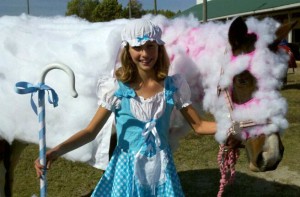
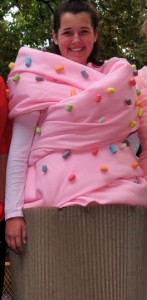
1st Place: Elizabeth Trexler as Little Bo Peep with her amazing horse/sheep2nd Place: Biz Renshaw as a strawberry cupcake
|
|
 |
3rd Place: Eliza Witherspoon as the largest green Ugly DollHonorable Mention: Logan Robinson as an orange crayon
 |
 |
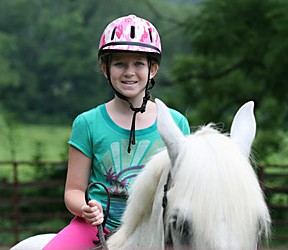
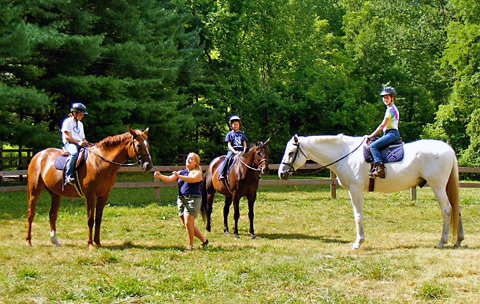 \n\nThe typical lesson at Rockbrook’s riding camps match up girls with similar horseback riding experience and skills. This allows the equestrian instructors to tailor each lesson to the right level for the young girls in that class. Even though our youth riding camp lessons happen every day except Sunday, and even though campers tend to have the same 2-4 other girls in their class, it’s also possible for each rider’s assigned horse to change over the course of their camp riding lessons. The instructors make those changes based on how a young rider is doing in the lessons.\n\nEach lesson also focuses on a specific forward seat (English Hunter Jumper) riding skill, generally. Everyone in the class might work on learning to post at a trot, to canter, or even jump their horse, for example. This is great because the riding instructors can coach each girl individually but also make suggestions that may benefits all of the riders in the class. It’s an ideal way to teach youth riding.\n\nLike for all the activities at Rockbrook, when girls take horseback riding they learn a lot and improve their skills, but they have tons of fun doing it.\n\n
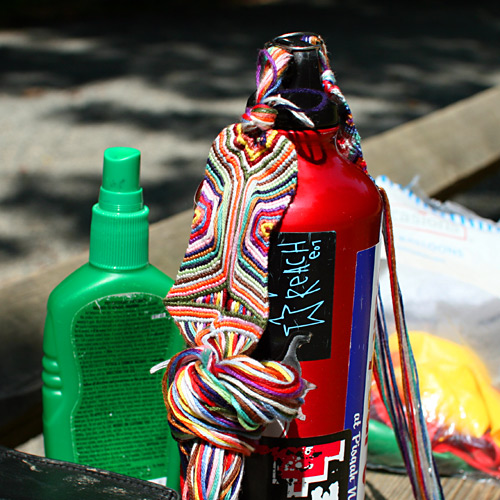
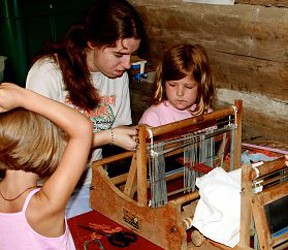
Everyone knows that coming to summer camp means making friendship bracelets. It means heading down to Curosty (our historic crafts, fiber arts, cabin) and learning a few of the many friendship bracelet knots and designs. Some are simple patterns, like these basic bracelet making instructions, that are very quick to learn. Using just a couple of strands of embroidery floss, you can a complete bracelet in just a few minutes.
But take a look at this one! Isn’t it amazing? It might even be a record because it’s got 62 strands of floss. The knots are standard overhand “friendship” knots, but there are so many strands involved, the final bracelet is incredibly wide. We can only imagine how long it’s taken to make!
This is another great example of all the incredible creativity percolating around Rockbrook. Super cool.
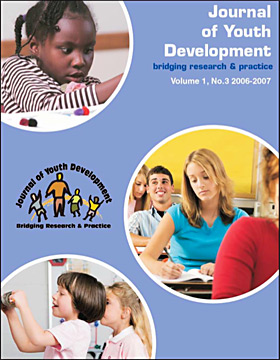
One phrase camp professionals often use to describe their work is “Youth Development.” Beginning, most likely, with the American Camp Association (ACA), most camp directors are quick to point out the beneficial outcomes children gain from the summer camp experience, the power camp has in developing young people’s character, confidence, and other important life-skills. In this way, summer camps are “youth development organizations.” Just about everyone who knows about camp, and Rockbrook is no exception, will agree.
Did you know that “Youth Development” also refers to a multidisciplinary academic discipline (drawing on psychology, education, sociology, family science, and public health, among others) dedicated to studying the development of school-aged children? Well, it’s true and there’s a peer-reviewed journal published to prove it! The Journal of Youth Development reports original research and focused studies with applied consequences that can make a difference in youth development professional’s work.
One article particularly relevant for camp professionals was published in the Journal back in 2007— “Components of Camp Experiences for Positive Youth Development.” Working with survey data gathered by the ACA from its member camps, the article tries to identify those aspects of camp life that have the greatest positive effect on youth development. Most significantly, the researchers conclude it is the supportive relationships children have with camp staff that are most important, followed by “program structure, elements of accountability, assessment of outcomes, and opportunities for skill building.” The take away lesson here, of course, is the importance of great people working as a camp’s counselors. We certainly know this at Rockbrook. A great staff of caring, attentive, supportive role models really benefits the campers and brings the whole camp together throughout the summer. Our campers make all kinds of strides as a result. We’ve all seen it, but with this research, there’s academic credibility backing it up!
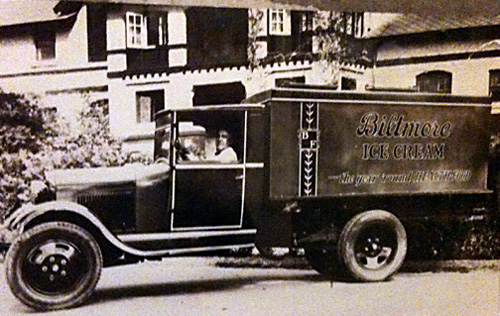
It’s ice cream, of course! Biltmore Dairy ice cream. This photo of a Biltmore Dairy delivery truck has that great slogan proudly written on the side: “Biltmore Ice Cream: The Year Round HEALTH FOOD.”
At Rockbrook, we certainly understand!
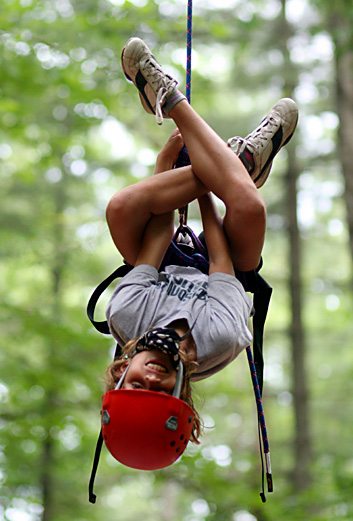
When girls first begin to learn rock climbing at Rockbrook, they start on our high ropes course climbing tower. It’s an “Alpine Tower” and you may have seen photos of it before here. It’s really the perfect place to learn how to climb because it makes so many different elements of “real rock climbing” so accessible. The girls can quickly learn important safety principles like the belay commands. They can begin to feel comfortable using the basic rock climbing gear like the harness, helmet, carabiner and rope. And, they can actually climb! A lot! The Alpine Climbing Tower provides close to 100 different ways to climb to the top; there are poles, nets, ropes, cables, climbing holds and rock walls to allow a whole range of difficulties and challenges. Girls can sign up for climbing instruction every week at camp and climb a couple of different routes every time they come!
But what do you learn when you first start out rock climbing? The importance of stretching and warming up is a good start. Everyone does better if they are flexible and a little stronger after warming up. After that the first lesson emphasizes the importance of balance, of being able to hold still balancing on one foot, for example, and moving the other leg or arms to reach a certain spot. Next, the girls learn footwork is central to rock climbing. It’s not mainly about finding grips for your hands, but rather about learning to use your feet and legs to move up the rock. Your hands and arms mainly help with balance, and your legs keep you moving. The other beginning rock climbing lesson to learn is more mental than physical. It’s learning to stay calm and focused. Rock climbing is a series of puzzles that requires concentration, and a calm, clear attention to details the rock presents. If you aren’t relaxed on the rock and get in a hurry, you might miss a hold or skip right over the perfect foothold making your route more strenuous and less enjoyable.
All of these lessons can take some practice to master, but there’s so much rock climbing going on at Rockbrook, the girls easily learn them. It’s really not hard to learn how to rock climb at camp, and the girls love it!